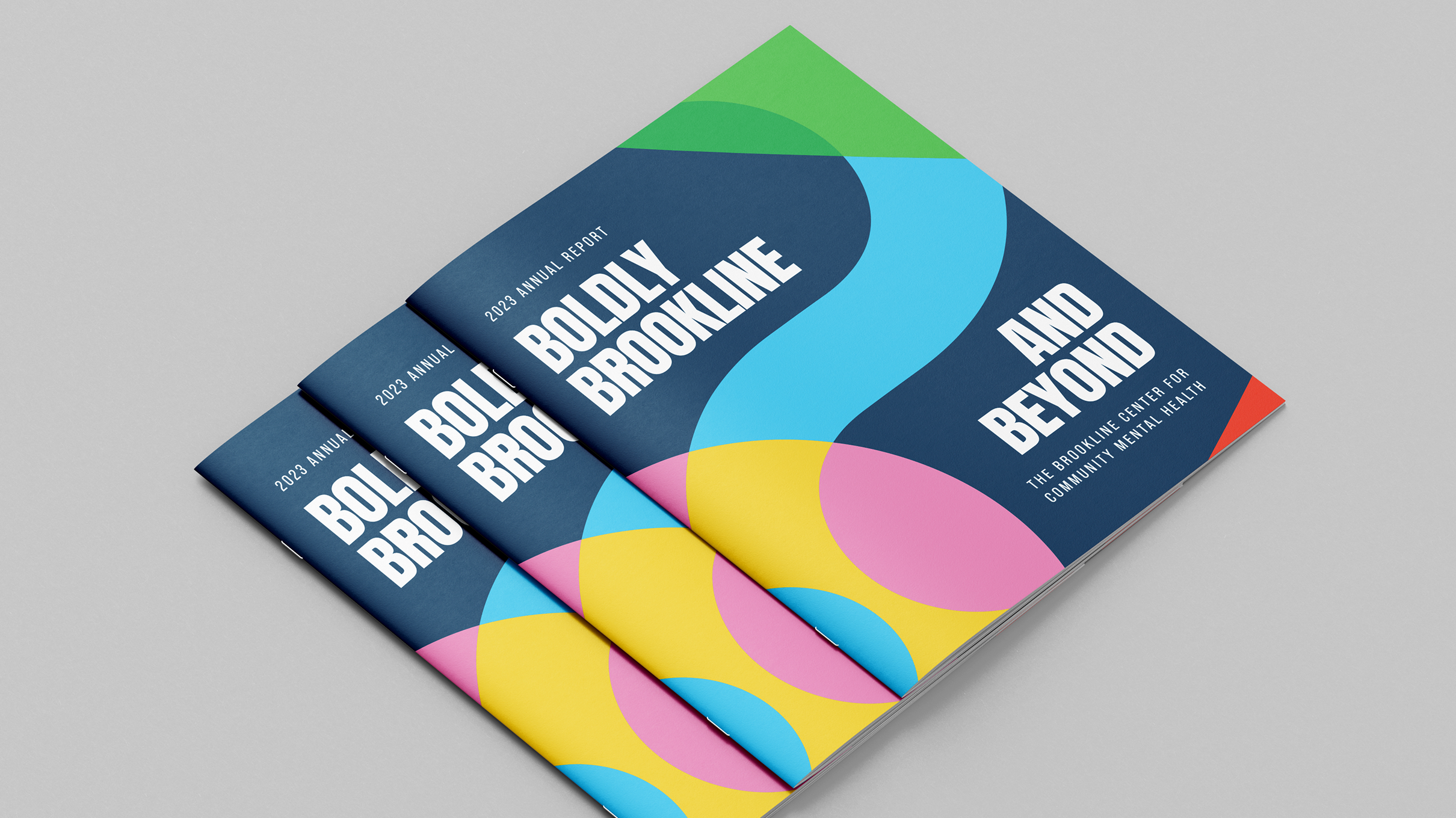
Background
The Brookline Center for Community Mental Health provides clinical care, school-based services, and community programs, while also developing and sharing new approaches to mental health care that extend beyond its local footprint. Its work includes direct services, prevention, and systems-level innovation, much of which does not lend itself to simple metrics or obvious visuals.
The annual report is a key way the organization communicates with donors, funders, and community stakeholders. The report needs to reflect both the human impact of the work and the Center’s role as an innovator expanding access to care.

Challenge
Convey the significance of nuanced, long-term mental health work that resists simple stories or easy measurement.

Solution
A concept-driven reporting approach that uses design to interpret ideas, not just illustrate outcomes.

Results
A series of annual reports that strengthens understanding, reinforces credibility, and builds confidence among donors and stakeholders.
Challenge
Convey the significance of nuanced, long-term mental health work that resists simple stories or easy measurement.
Solution
A concept-driven reporting approach that uses design to interpret ideas, not just illustrate outcomes.
Results
A series of annual reports that strengthens understanding, reinforces credibility, and builds confidence among donors and stakeholders.
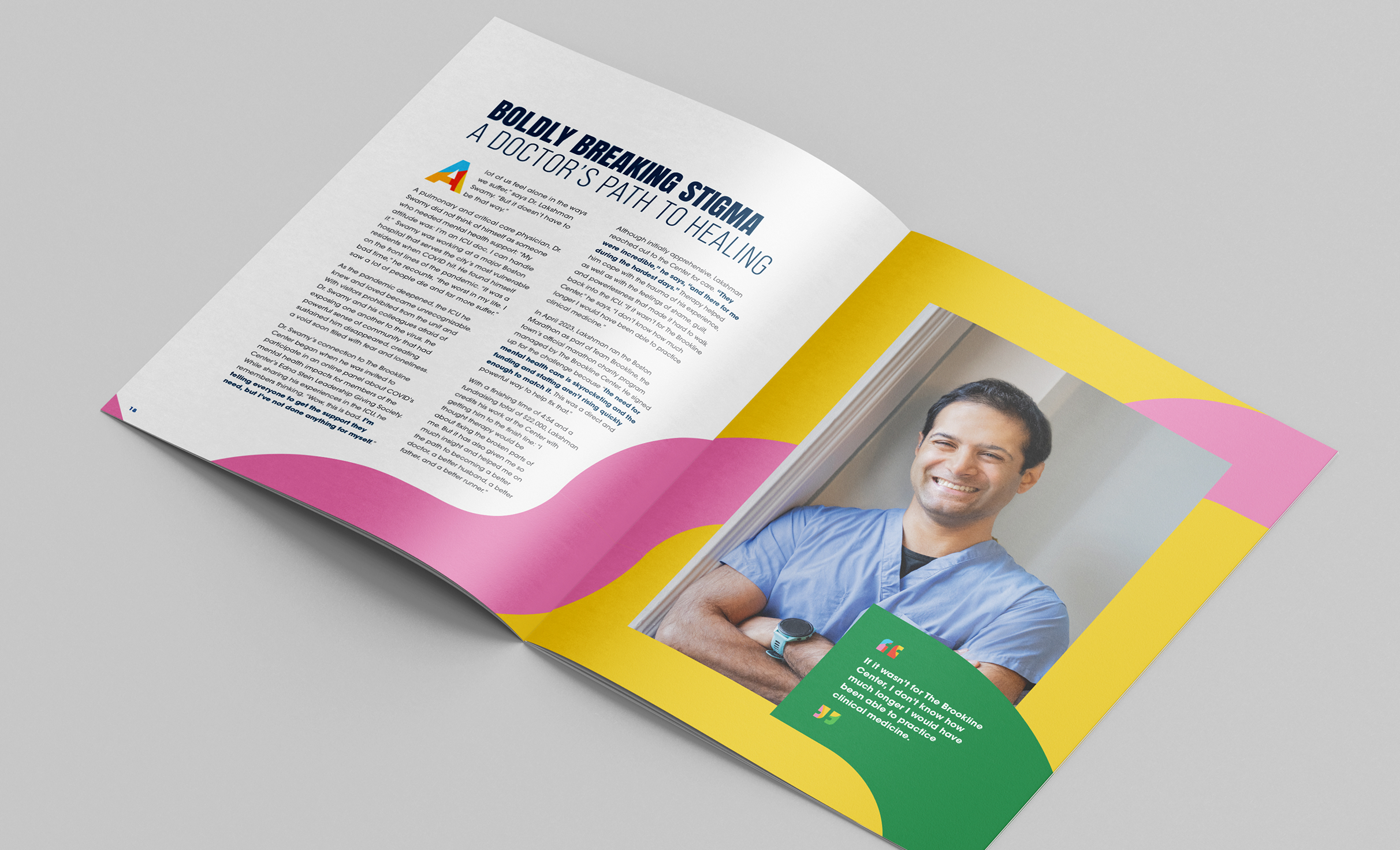
The Objective
Translate complex and abstract work into a compelling annual narrative
The goal was to design annual reports that could communicate ideas such as transparency, accessibility, equity, and long-term significance without reducing the work to surface-level stories. Each report needed to support donor understanding while reflecting the Center’s gravity and forward momentum.
Design Solution
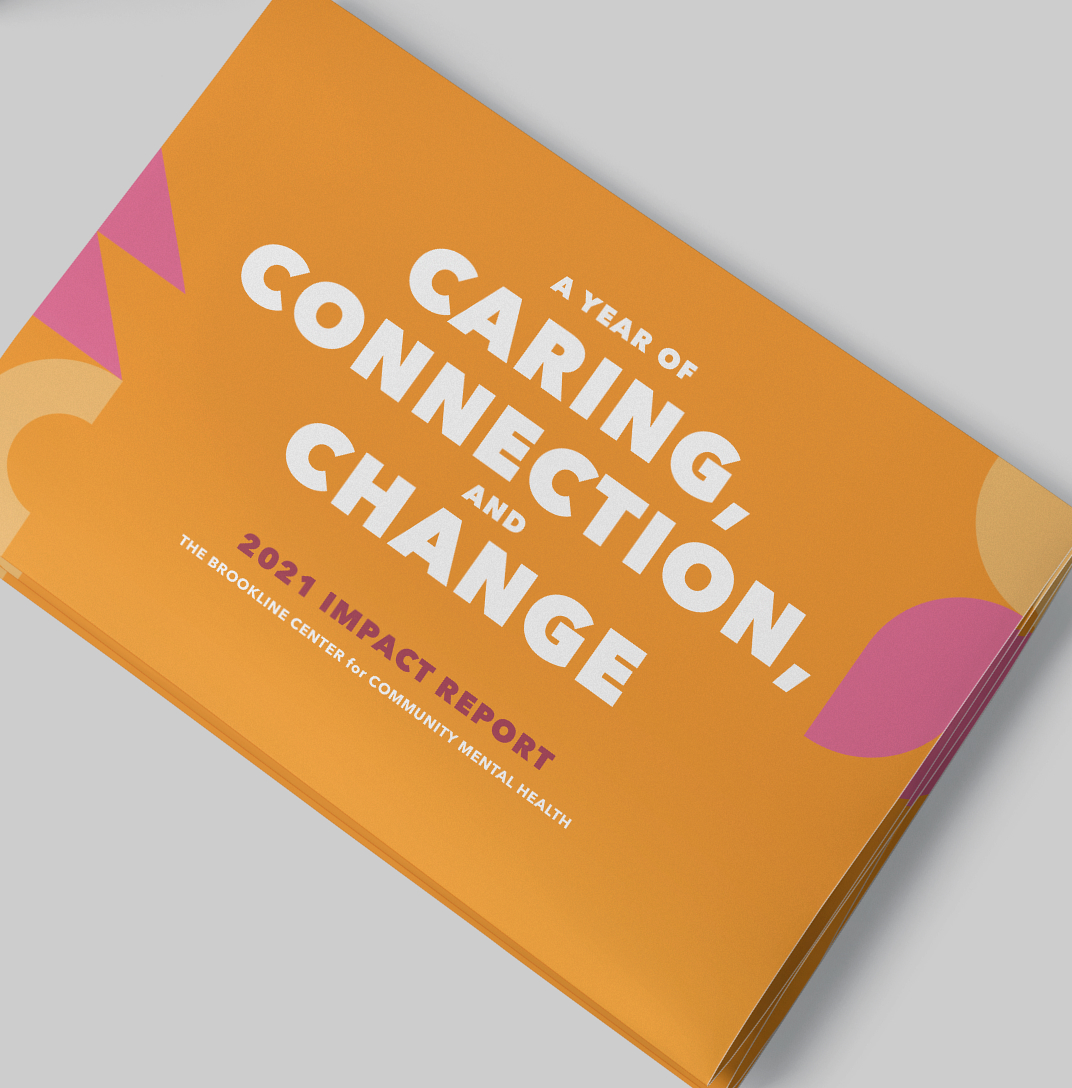
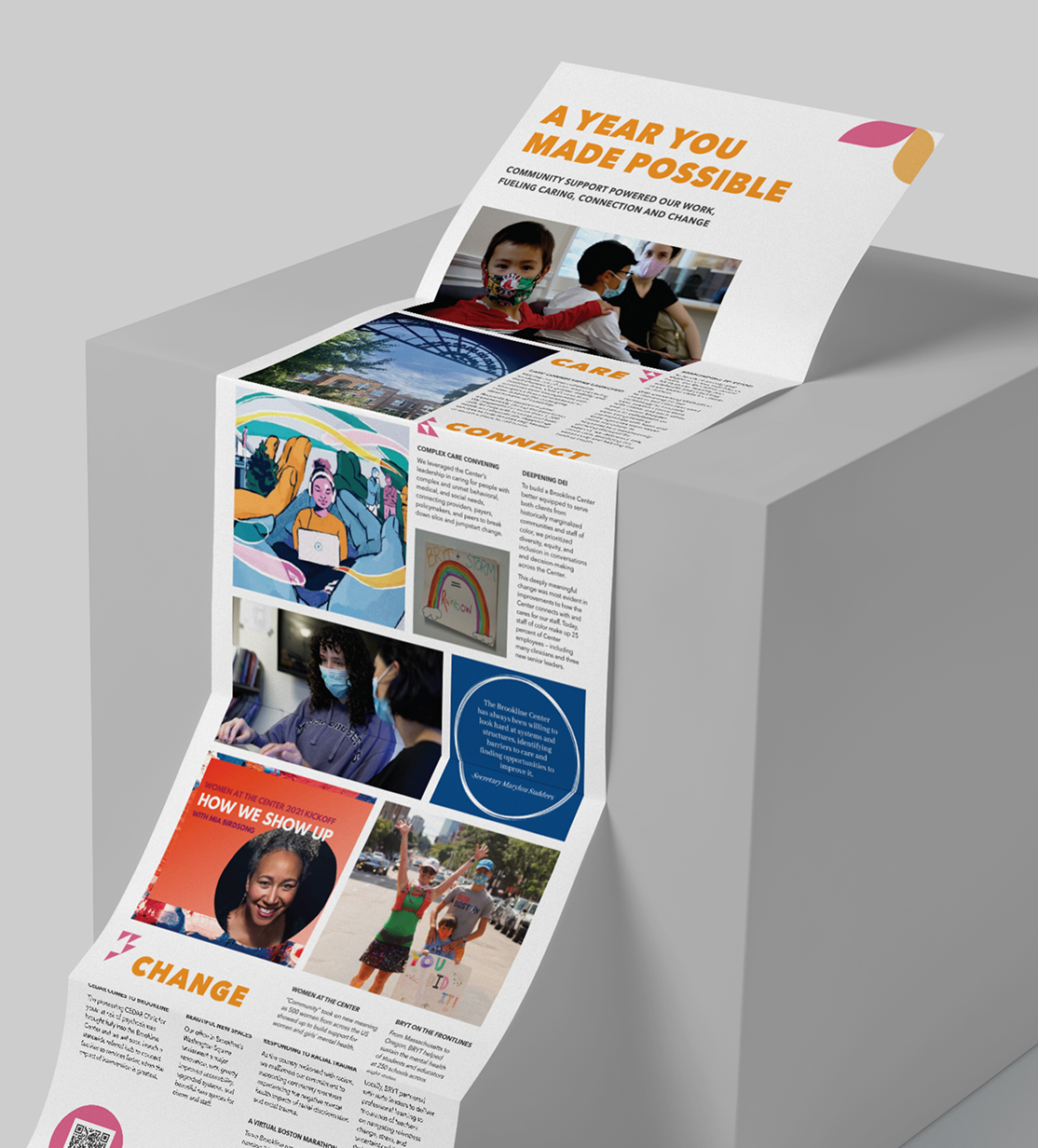
Concept-led reporting that evolves year to year
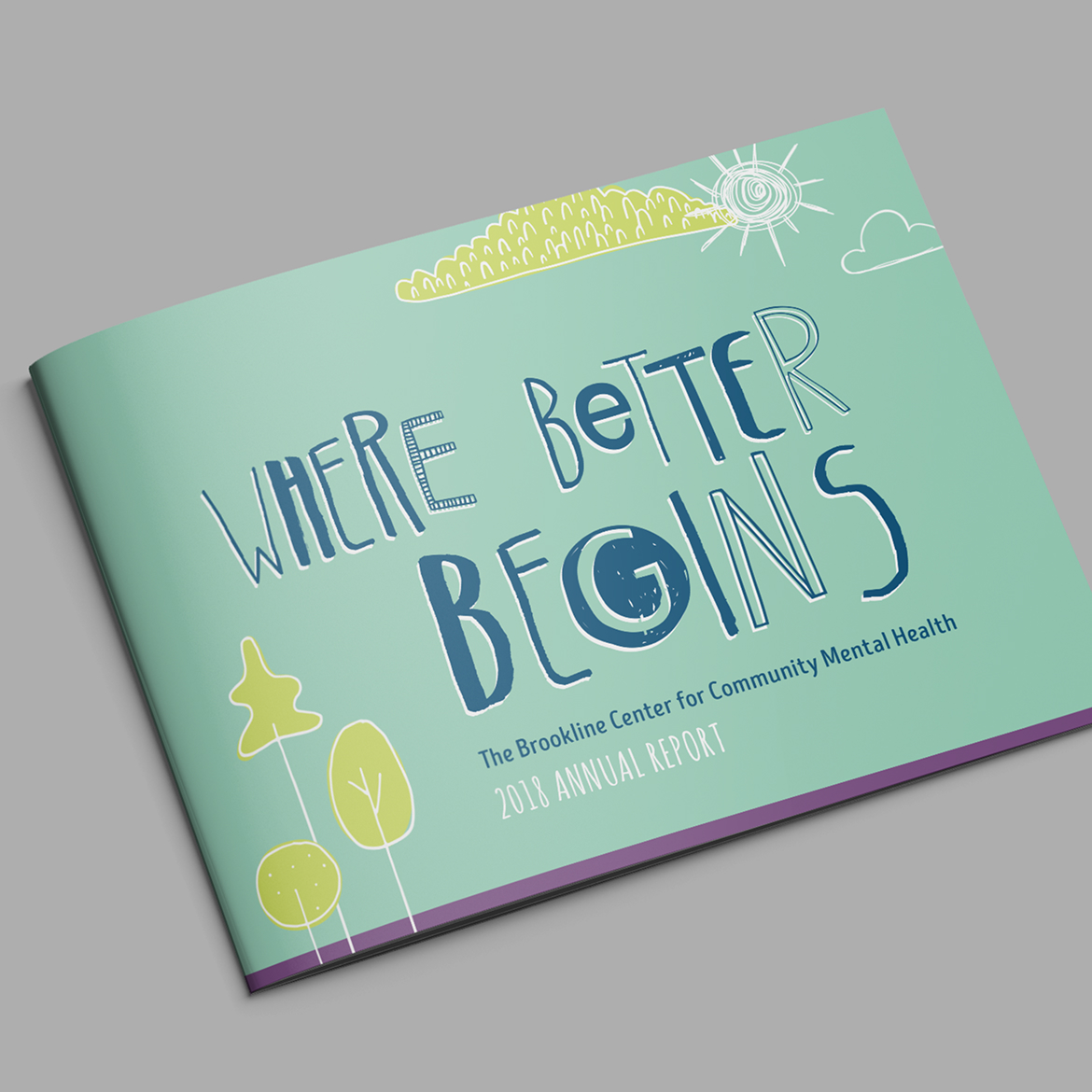
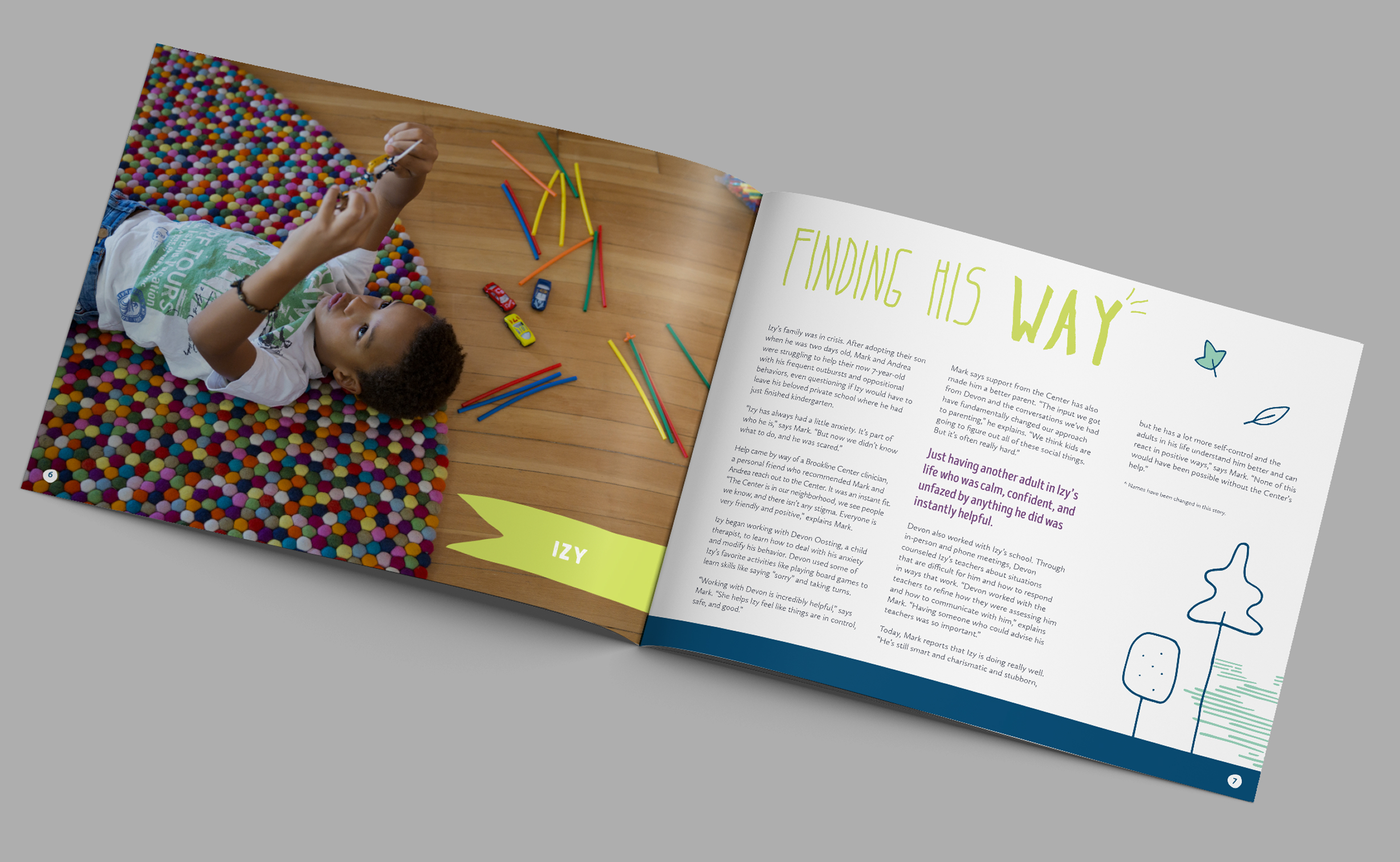
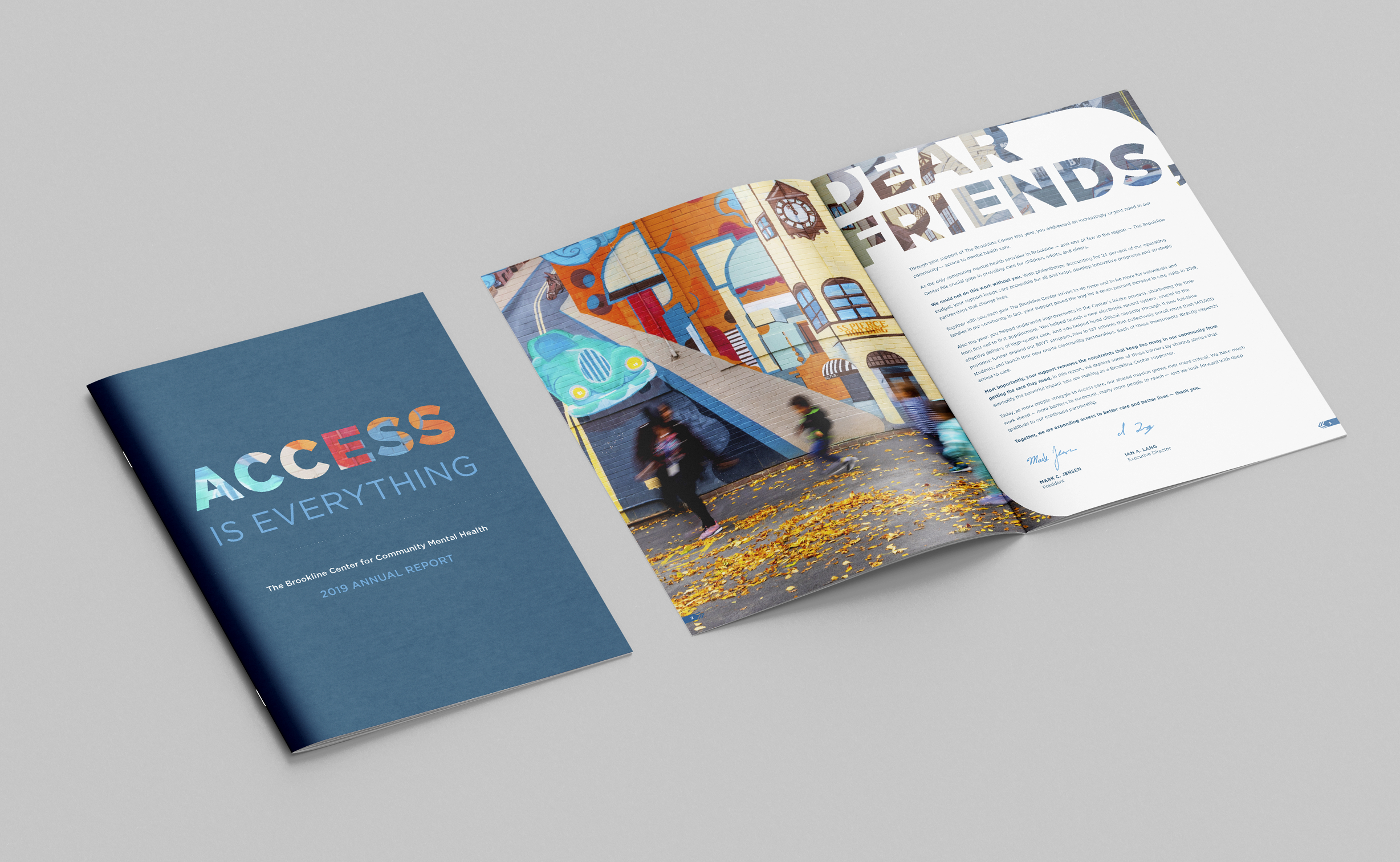
We designed a series of annual reports for The Brookline Center, each anchored by a clear conceptual theme. Rather than relying on formulaic layouts, each report introduced a distinct visual approach to interpret the year’s priorities. Color, typography, illustration, photography, and data presentation were used intentionally to support themes like access, openness, and systems change. While the concepts evolved annually, the reports maintained a consistent level of editorial rigor and design quality, creating a recognizable body of work over time.
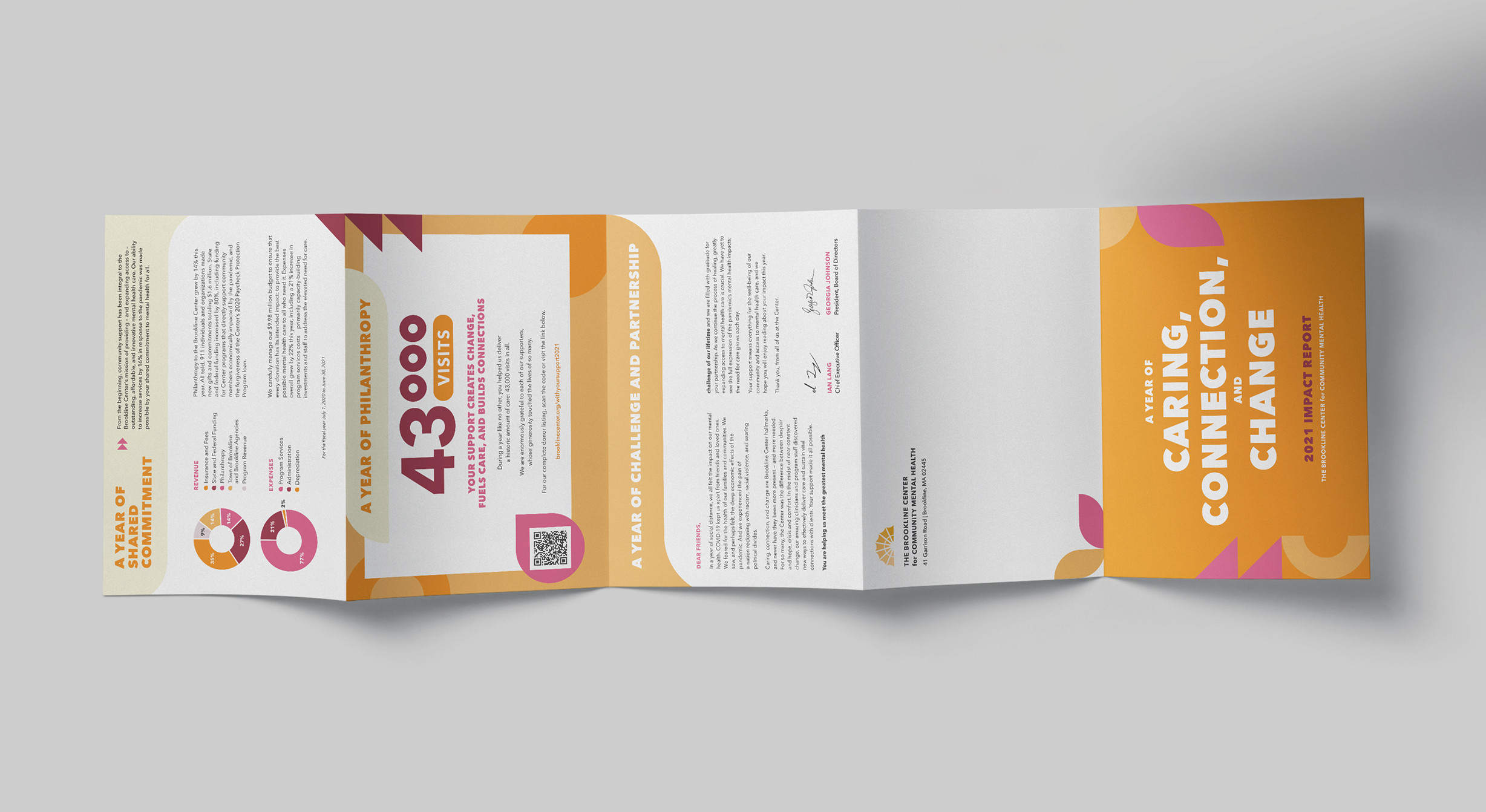
Color Palette
Navy
Orange
Yellow
Pink
Teal

Challenges & Accommodations
Communicating innovation and sophisticated insights without oversimplifying
Much of the Center’s influence happens over time and across systems, not in single outcomes. The challenge was to create visuals that could support nuanced ideas without resorting to generic imagery or overly technical explanations, while still keeping the reports engaging for a donor audience.
Outcomes
A coherent series that supports understanding and trust
The resulting reports form a cohesive archive that reflects The Brookline Center’s values and ambitions. Each publication helps readers grasp both the scope and direction of the organization’s work, reinforcing confidence in its approach. Together, the series demonstrates how thoughtful design can support transparency, accessibility, and trust when communicating complex mental health work.